TFSA or RRSP, Which is right for you?

TFSA or RRSP, Which is right for you?

Deciding whether to invest in a TFSA or RRSP depends on your individual financial goals and circumstances. Here are a few scenarios to help you determine which option might be better suited for you.

Scenario 1: You're in a low-income tax bracket and expect to earn more in the future.

In this case, a TFSA may be the better option. Since you're in a lower tax bracket, the tax deduction you'd receive from contributing to an RRSP may not be as significant as it would be if you were in a higher tax bracket. Additionally, if you expect to earn more in the future, you could end up paying more tax on your RRSP withdrawals than you would on your TFSA withdrawals.

Scenario 2: You're in a high-income tax bracket and want to reduce your taxable income.

If you're in a high-income tax bracket, contributing to an RRSP could help lower your taxable income. However, keep in mind that you'll still have to pay tax on your RRSP withdrawals when you retire. If you expect to be in a lower tax bracket when you retire, then an RRSP may be a good option. If you expect to be in a higher tax bracket, a TFSA may be a better choice.

Scenario 3: You have short-term financial goals.

If you have short-term financial goals, such as saving for a down payment on a home or a vacation, then a TFSA may be a better option. Since you can withdraw money from a TFSA at any time without penalty, it provides more flexibility than an RRSP.

Scenario 4: You're saving for retirement.

Both TFSAs and RRSPs can be good options for saving for retirement. If you're not sure which option is right for you, consider speaking with a financial advisor who can help you make an informed decision based on your specific financial goals and circumstances.

In conclusion, TFSAs and RRSPs both offer unique benefits and drawbacks, and deciding which option is right for you depends on your individual financial goals and circumstances. By understanding the pros and cons of each, you can make an informed decision that helps you achieve your financial goals.

Pros and Cons of TFSAs and RRSPs

Pros and Cons of TFSAs and RRSPs

Tax-Free Savings Accounts (TFSAs)

A TFSA is an investment account that allows you to save and invest money without paying tax on the growth of your investments. You can contribute up to a certain amount each year (the annual contribution limit is set by the federal government and is subject to change), and any investment income you earn within the account is tax-free. When you withdraw money from a TFSA, you don't pay tax on the amount you withdraw.

Pros:

  • Tax-free growth: Any investment income you earn within a TFSA is tax-free, which can help your savings grow faster.
  • Flexible withdrawals: You can withdraw money from a TFSA at any time, for any reason, without penalty. This makes TFSAs a good choice if you need to access your savings for unexpected expenses or emergencies.
  • No age limit: You can contribute to a TFSA for as long as you like, even after you turn 71 (the age at which you have to convert your RRSP into a Registered - Retirement Income Fund, or RRIF).

Cons:

  • Annual contribution limits: While you can contribute to a TFSA every year, there is a limit to how much you can contribute. If you exceed your contribution limit, you'll have to pay a penalty tax.
  • Limited tax deduction: Unlike RRSP contributions, TFSA contributions are not tax-deductible. This means you won't get a tax refund for contributing to a TFSA.

Registered Retirement Savings Plans (RRSPs)

An RRSP is an investment account that allows you to save for retirement while reducing your taxable income. You can contribute up to a certain amount each year (the annual contribution limit is set by the federal government and is subject to change), and the contributions you make are tax-deductible. This means you can reduce the amount of income tax you have to pay in the year you make the contribution. The money in your RRSP grows tax-free until you withdraw it, at which point it is taxed as income.

Pros:

  • Tax-deferred growth: The money you earn within an RRSP grows tax-free until you withdraw it, which can help your savings grow faster.
  • Tax deduction: RRSP contributions are tax-deductible, which means you can reduce your taxable income and potentially receive a tax refund.
  • Spousal RRSPs: You can contribute to a Spousal RRSP, which can help reduce your spouse's income tax if they are in a lower tax bracket.

Cons:

  • Required withdrawals: When you turn 71, you have to convert your RRSP into a Registered Retirement Income Fund (RRIF) and start taking minimum annual withdrawals. This can be a disadvantage if you don't need the money and would prefer to let it continue to grow tax-free.
  • Tax on withdrawals: When you withdraw money from your RRSP, it is taxed as income, which can reduce the amount you have available for spending or investing.
  • Limited flexibility: If you withdraw money from your RRSP before retirement, you'll have to pay a penalty tax.

Popular investment ways in Canada

Investing is an important part of financial planning and wealth-building. In Canada, there are many different ways to invest, from stocks and bonds to real estate and alternative investments. Let's take a closer look at some of the most popular investment options available to Canadians.

Stocks:

Investing in the stock market is one of the most popular investment options in Canada. Many Canadians invest in individual stocks through a brokerage account or through mutual funds and exchange-traded funds (ETFs) that invest in a basket of stocks. The Toronto Stock Exchange (TSX) is Canada's largest stock exchange, and there are many publicly traded companies that Canadians can invest in. Some popular Canadian stocks include Shopify, Royal Bank of Canada, and Enbridge.

Bonds:

Bonds are a type of debt security that allows investors to lend money to governments or corporations in exchange for regular interest payments. Bonds are generally considered to be a lower-risk investment compared to stocks, as they typically offer a more predictable stream of income. Canadian government bonds are often considered to be among the safest bonds in the world. Many Canadians invest in bonds through mutual funds or ETFs.

Real estate:

Real estate is a popular investment option in Canada, with many Canadians investing in rental properties or buying and selling homes for profit. Real estate investment trusts (REITs) are another way to invest in real estate without owning property directly. REITs invest in a portfolio of properties and pay out regular dividends to investors.

Mutual funds and ETFs:

Mutual funds and ETFs are investment vehicles that allow investors to pool their money together and invest in a diversified portfolio of stocks, bonds, and other assets. Mutual funds are actively managed by a professional fund manager, while ETFs are passively managed and typically have lower fees. Both mutual funds and ETFs are popular investment options in Canada.

Retirement savings:

Investing in retirement savings is important for Canadians, and there are several options available. Registered Retirement Savings Plans (RRSPs) allow Canadians to contribute pre-tax income to a retirement savings account, while Tax-Free Savings Accounts (TFSAs) allow Canadians to invest after-tax income and withdraw their earnings tax-free. Employer-sponsored pension plans are another way that many Canadians save for retirement.

Alternative investments:

Alternative investments are a less traditional way to invest, and include assets such as commodities, private equity, and hedge funds. These types of investments are generally more complex and require more expertise than traditional investments like stocks and bonds.

In conclusion, there are many different ways to invest in Canada, each with their own advantages and risks. Canadians should carefully consider their investment goals and risk tolerance before investing in any particular asset. Working with a financial advisor can also be helpful in developing an investment strategy that meets your individual needs and goals.

Here are the 5-year average returns for some of the investment examples above.

Stocks:

  • Shopify (SHOP): 53.7%
  • Royal Bank of Canada (RY): 10.3%
  • Enbridge Inc. (ENB): 9.3%
  • Canadian National Railway Company (CNR): 10.4%
  • Brookfield Asset Management Inc. (BAM.A): 15.5%

Source: Yahoo Finance

Bonds:

  • iShares Canadian Government Bond Index ETF (XGB): 2.8%
  • BMO Aggregate Bond Index ETF (ZAG): 2.8%
  • Vanguard Canadian Aggregate Bond Index ETF (VAB): 2.8%

Source: Morningstar

Real estate:

  • RioCan Real Estate Investment Trust (REI.UN): 5.5%
  • Canadian Apartment Properties Real Estate Investment Trust (CAR.UN): 11.1%
  • SmartCentres Real Estate Investment Trust (SRU.UN): 3.8%
  • H&R Real Estate Investment Trust (HR.UN): 2.8%

Source: Yahoo Finance

Mutual funds and ETFs:

Source: Morningstar

Retirement savings:

  • Registered Retirement Savings Plans (RRSPs) and Tax-Free Savings Accounts (TFSAs) returns will depend on the investments held within them, and can vary widely.
  • Alternative investments:
  • Commodities ETFs, such as iShares S&P/TSX Global Base Metals Index ETF (XBM): 26.7%
  • Private Equity funds, such as Brookfield Asset Management Inc.'s private equity funds: returns can vary widely depending on the specific fund
  • Hedge funds, such as the Vertex Arbitrage Fund (Class F): returns can vary widely depending on the specific fund

Source: Morningstar

What time do you have ?!

もうかなり前、まだビクトリアに来たばかりの頃、


      "What time do you have?"


と咄嗟に聞かれた。勘の良い人なら時間を聞かれているんだな、と予測できるかも知れないが、その頃それなりに(初心者は卒業したという意味で)英語ができるつもりでいた僕は、咄嗟に何を言われているのか気づくことができず、”なにっ??Do I have time??? Have?? ” と生真面目に翻訳しようとしていた僕の頭のなかはクエスチョンマークだらけで、3回ぐらい聞き直してしまった。

最後に相手が自分の左手首を指しながら、”What time do you have??”と笑いながら聞いてくれたので、やっと ”あぁ~、何時か聞いてるんだ~” と気づいた始末。


かつてそこそこ出来ていた中学校の英語で、”What time is it now?” と習ったことが金科玉条のごとく頭にこびりついていた僕は、それ以外の表現を受け付けず応用が利かなかったのだった。


こんなところに、外国語習得のセンス有り無しが現れるのかなぁ、なんて思ったりする。たまにいるよね、そんなに長期間いる訳でもないのに、すぐにそこそこ話せるようになるセンスの良い方が。。。僕は間違いなくセンスがない。


と思っていたら、英語の表現にもいろいろな解釈があるということを、気づかせてくれた事件(?)が職場でもあった。


とある金曜日の午前中、その日は平和で明日は休みということもあり、みなリラックスムード。で、猫好きの同僚の一人がこんなメールをチームメンバーに送ってきた。


  f:id:htr1036:20181005065819p:plain


ぱっと見、どこかに夕食(dinner)を食べに行こうぜって誘ってるんだとみな(注:みんな北米英語ネイティブです)思って、行こう!行こう!となったのだけれど、いざ出発時間を決める段になって、メールを送った本人が、”じゃあ、11時45分出発ね!”って返信して、みなびっくり。


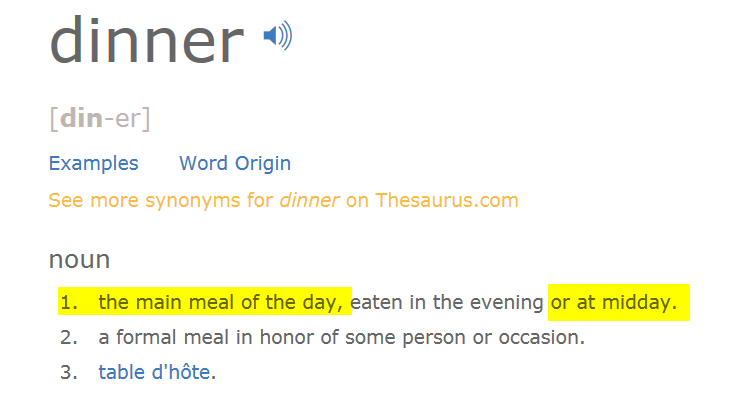
”何でじゃー!” ”そりゃ昼食(lunch)だろっ!”とつっこまれまくり。しかし送った本人は ”いやいや、僕のところじゃ、こういう風に食事に誘うときに言うんだけど。。。”と至ってまじめで、冗談でもないらしい。証拠に、辞書でdinnerの意味まで引っ張ってきた。いわく;


f:id:htr1036:20181005071956p:plain


 と、確かに、dinnerの意味は厳密にはその日の一番メインの食事のことで、夕食だけとは限らない。単に通常それが夕食になるから、いつの間にか、”夕食=dinner” となっってるんだと反論していた。


これも応用の利かない僕の頭では、”夕食のことだ!”と、自信をもって翻訳してくれていたが、今回ばかりは僕だけではなく、北米の中部&西海岸出身のカナダ人&アメリカ人もそう思っていたようで、辞書を見せられても、”そりゃPEIだけだよ”ってその後しばらく議論が盛り上がった。


#ちなみにこのメールを送ってくれた同僚は、赤毛のアンで有名なカナダの東岸、PEI(プリンスエドワード島)出身で、猫好きガンダム好きのオタクだけど、とても丁寧な英語を話す良い奴です。


英語コンプレックスに日々やられている、日本の片田舎から出てきた者にとっては、なんだか形而上学でも聞くような議論だったが、英語圏の人たちでも(レベルは非常に違うが)悩ましい表現があるという事実は、気分を多少明るくさせてくれた。


先日、こんなことをふと思い出したついでに、我が家にあるアマゾンのALEXAに時間を聞いてみた。


     "Hey, ALEXA,  What time do you have??"


と、私。しばらくぐるぐる考えていたが、いつもの調子で、


     "Sorry, I don't know that one..."


ふむ、最先端のAIも英語のセンスがないらしい。


カナダ・ビクトリア留学 - 高校生の場合

ひょんなことから、カナダ・ビクトリアへの公立高校留学について軽く調べたので、以下はその忘備録。


General info :

www.studyinvictoria.com

FAQによると、ビクトリア周辺の7つの公立高校への留学プログラムがあるらしい。一応行きたい高校をリクエストできるらしいが、保障はないとのこと。また英語圏以外の留学生は慣れるまでESLクラスをとった方がよいとのこと。まあ、当然ですね。いきなり本番環境にぶち込まれた日にはトラウマになりそう。特に若い諸君は。


で、気になる価格ですが、四つのコースがありそれぞれ以下の通り。


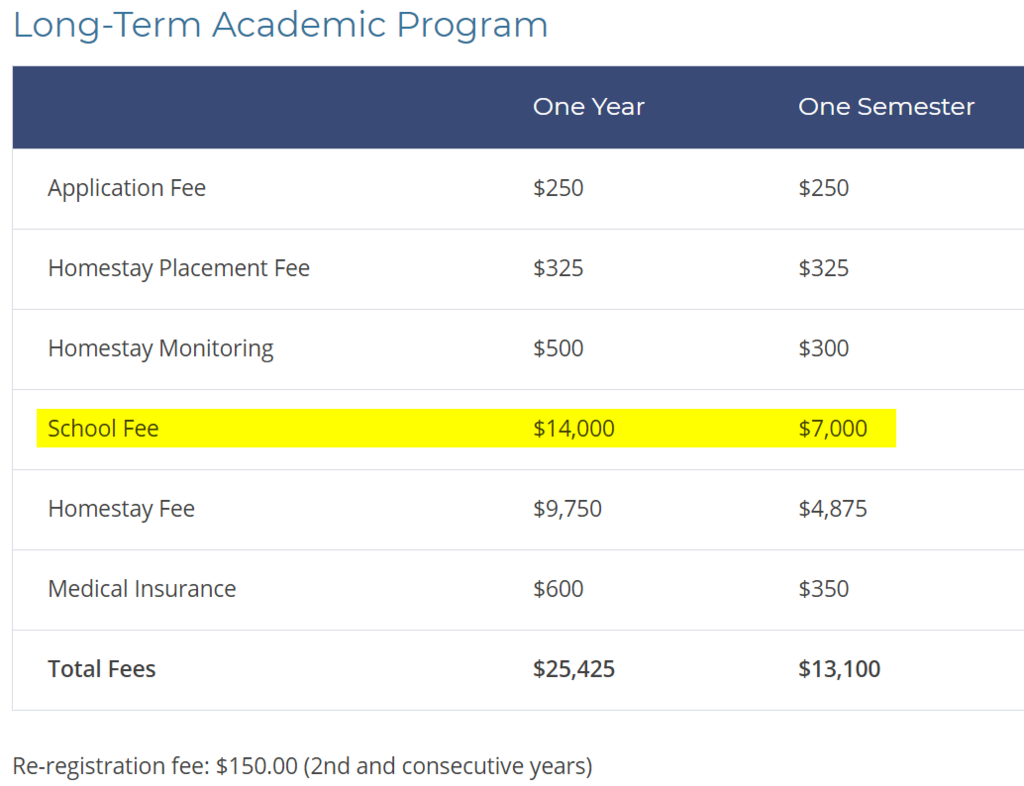
1.LONG TERM PROGRAM PRICES AND FEESf:id:htr1036:20180926075952p:plain

 一学期および一年留学した際の料金目安。授業料だけで14,000カナダドル(日本円でおよそ120万くらい)もするのね。。。これを高いと見るか安いと見るか。はたまた妥当と見るか。

同時に調べたビクトリアの有名私立 St. Michaels University Schoolの場合、66,100カナダドル!(International students, 寮費、食事などもろもろ込み)なので、それに比べれば半額以下ですな。しかし私立高けー。

www.smus.ca


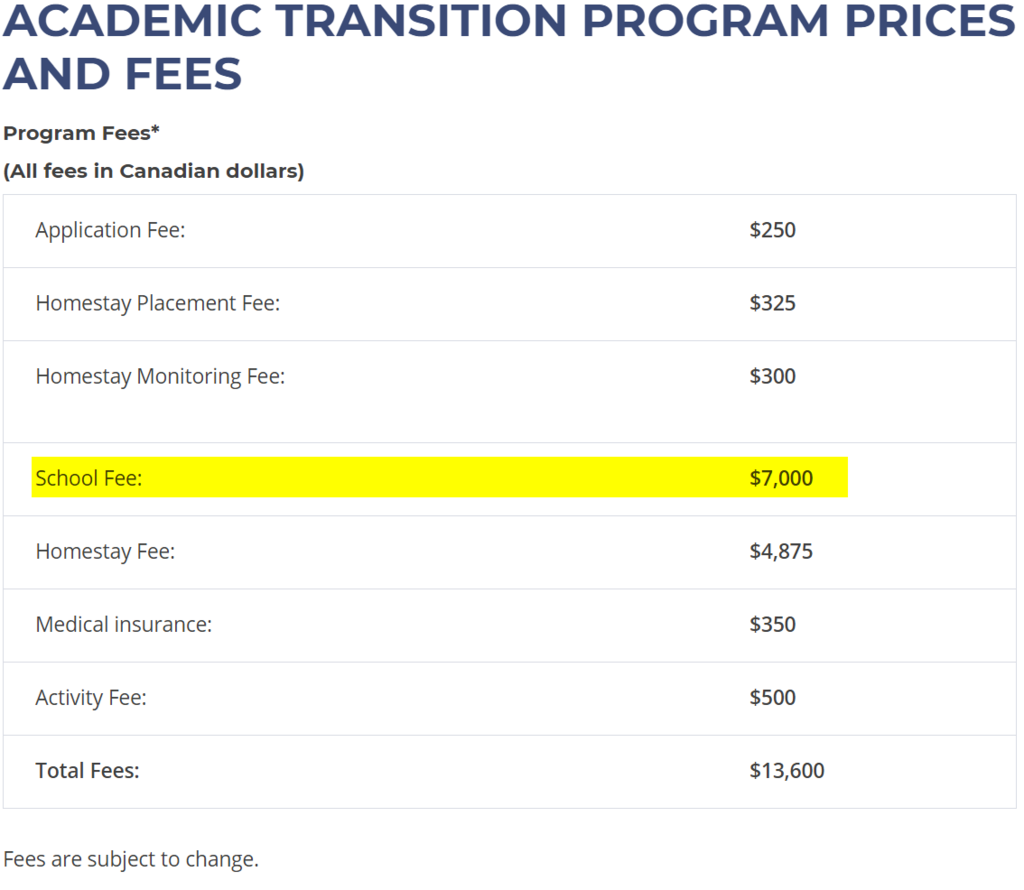
2.ACADEMIC TRANSITION PROGRAM PRICES AND FEES  

f:id:htr1036:20180926082049p:plain

Academic Transition Program | Victoria International Student Programs, Greater Victoria School District

説明によれば高校編入のための4-5ヶ月の準備コースらしい。と、いうことは一番最初にとることになるコースなのかな。はっきりしない。

Students may enter the program at any time within six weeks of the start date.

とのことなので、おそらく英語力等々を勘案されて、行けって言われるのでしょうかね。 


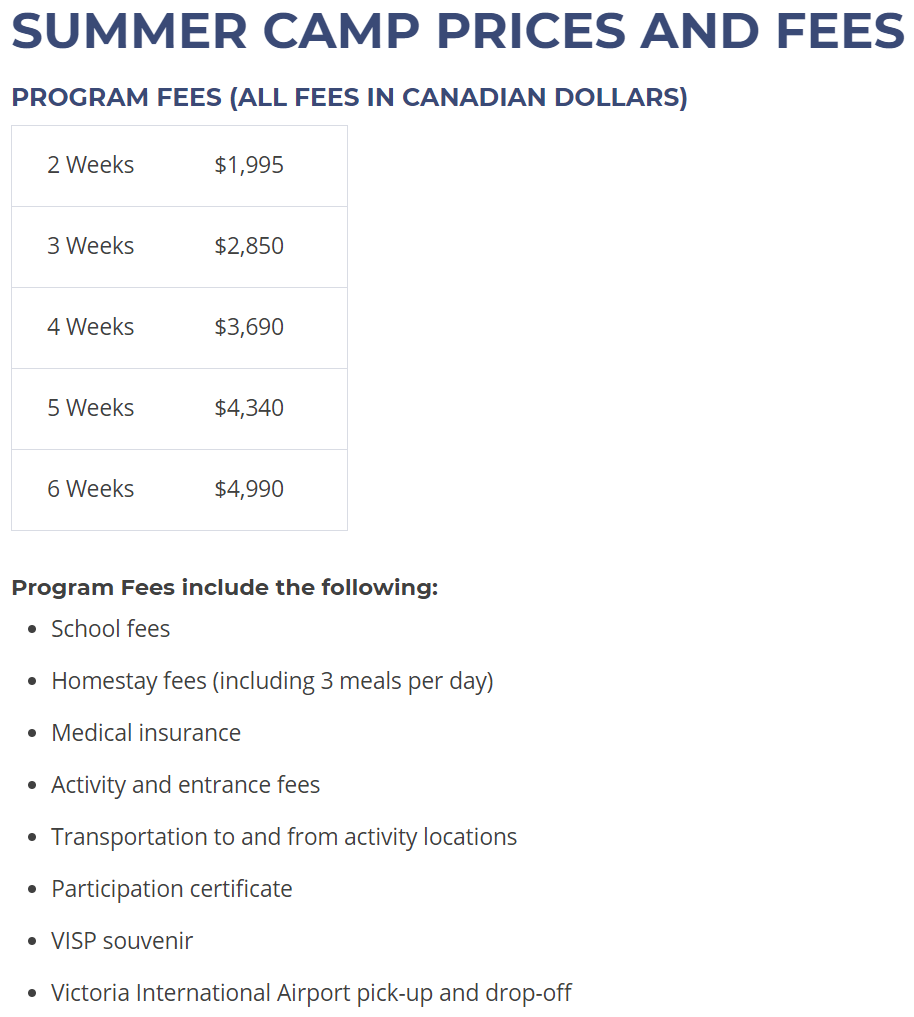
3.SUMMER CAMP PRICES AND FEES

f:id:htr1036:20180926083909p:plain

個人的にはこれが一番最初はお勧めな感じがする。夏休み期間中のプログラム。諸費用およびホームステイ・3食付でこの値段。まあ妥当だと思う。一度これで体験してみて、気に入れば、より長期の留学が良いのではなかろうか。または次の短期留学もいいかも。


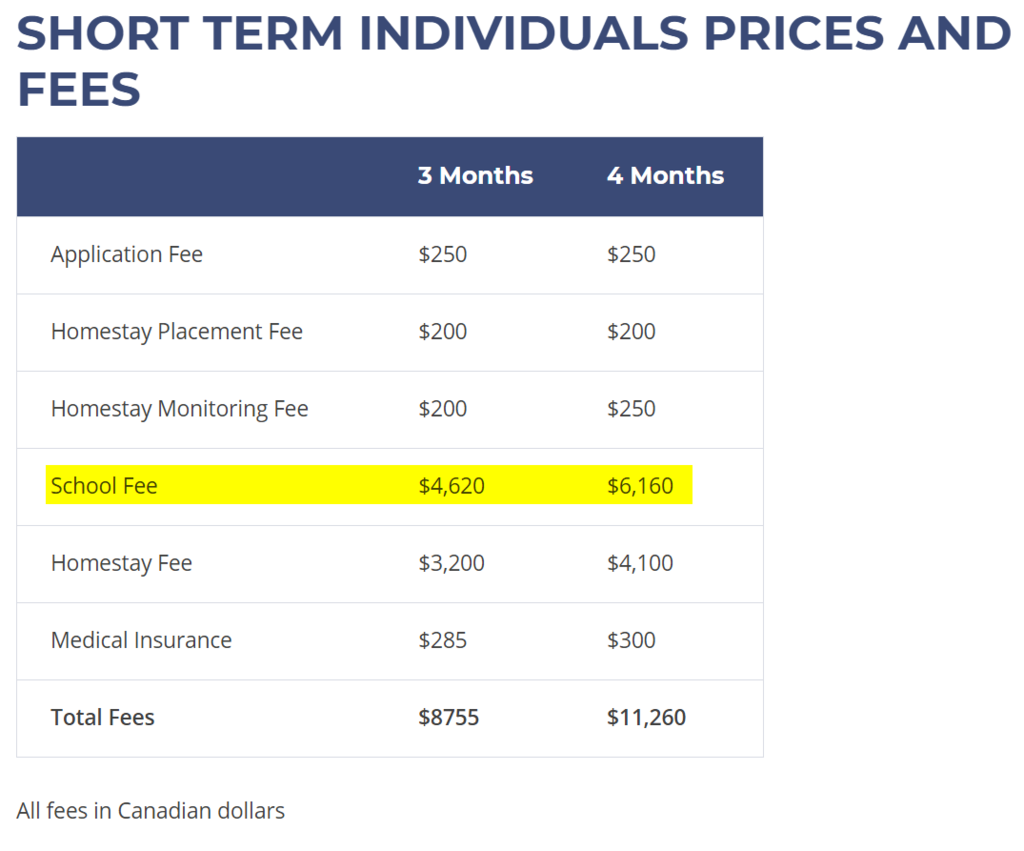
4.SHORT TERM INDIVIDUALS PRICES AND FEES

f:id:htr1036:20180926085024p:plain

3,4ヶ月の短期留学。最初の取っ掛かりとして。


感想:高校留学結構見かける。個人的には、こちらの大学に入学するつもりなら長期が良いとは思うけれど、そうでないのなら、サマーキャンプか短期か。でも短期だと日本での一学期丸々居ない事になるから、日本での受験を考えるとどうでしょう?エスカレーターで上がれるなら別だけど、そうでないなら受験に不利になりゃせん?そう考えると、やっぱりサマーキャンプかなぁ。学期中の留学は日本との学習のトレードオフをどう考えるかによるよね。